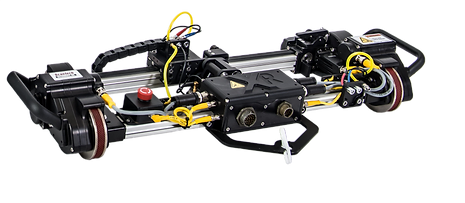
XR Spider
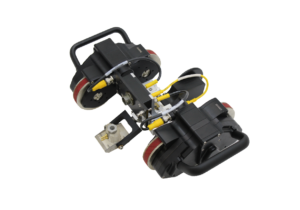
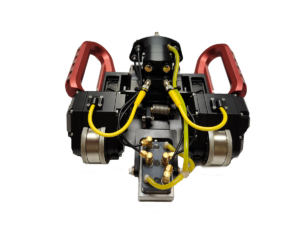
Compact automated raster scanner for collecting thickness data across an area.

ScanTech designs and manufactures ultrasonic testing (UT) scanners for corrosion mapping, inline B-scanning, and weld inspection. Find a scanner that fits the asset, the access you have, and the data you need to collect.
Choose a raster scanner when you need to see how remaining wall thickness varies across an area. A thickness C-scan gives you a top-down view of the scanned surface so you can see where thinning occurs and how far it extends.
Compact automated raster scanner for collecting thickness data across an area.
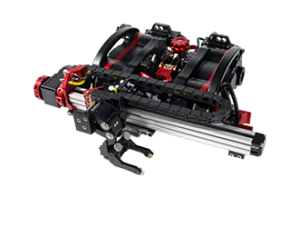
Steerable platform for raster corrosion mapping and inline B-scanning.
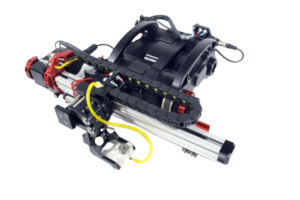
Non-steerable, two-axis scanner for raster corrosion mapping.
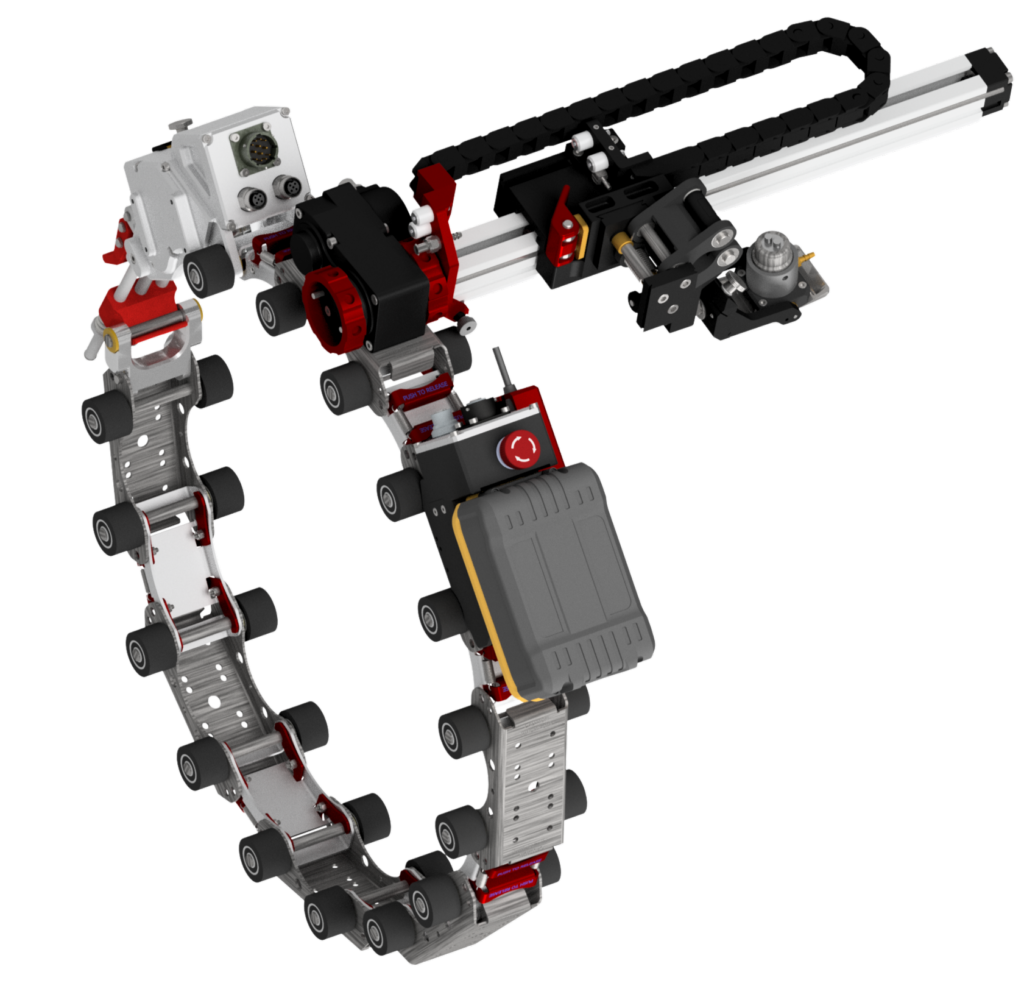
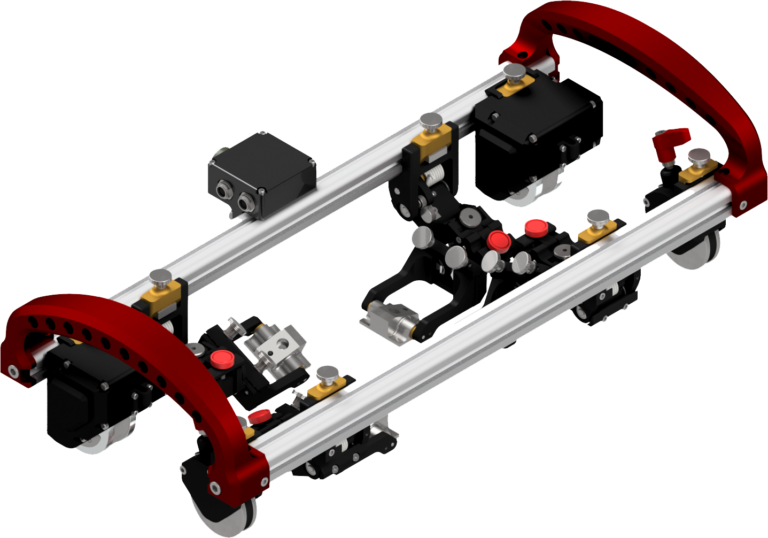
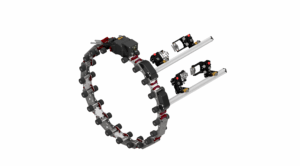
Modular chain scanner with a raster arm for mapping pipe wall thickness.
Choose an inline B-scanner when you need a cross-sectional view along one scan path. For example, use a line scan to record a thickness profile along a vertical path on a tank wall.
Match the weld scanner to the seam direction, component diameter, and probe arrangement your inspection procedure requires. An axial seam along a pipe and a circumferential weld around it may need different setups.
Need a deeper comparison? Read our guide to choosing an NDT scanner.
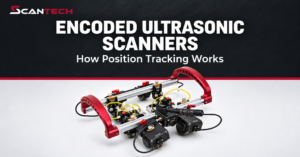
It moves one or more ultrasonic probes along an inspection surface. In an encoded setup, position data lets compatible instrumentation and software tie each reading to a location on the asset.
A B-scan shows a cross-section along a scan path. A C-scan shows a top-down view of a scanned area. For wall thickness, choose a B-scan for a profile along a line and a thickness C-scan for coverage across an area.
A manual scanner can suit smaller jobs where the operator can reach the full scan path. A motorized scanner is worth evaluating for larger areas, repeated passes, or remote operation. Compare total setup and scan time on a representative part.
Compatibility depends on the instrument, probes or wedges, encoder connection, scanner configuration, and software. Share the models you already use so we can confirm what will work together.
Tell us what you need to inspect, the asset dimensions, the clearance you have, and the data you need to collect. We’ll help you narrow down the configuration and see how it works on a representative application.
Request a Scanner Demo