Table of Contents
Ultrasonic testing on pipelines uses sound waves to measure wall thickness and detect corrosion by scanning the pipe surface with a probe or automated scanner.
Ultrasonic testing (UT) is one of the most widely used non-destructive testing methods for pipeline inspection. It provides accurate thickness measurements and identifies corrosion or defects without damaging the material.
In pipeline environments where reliability and repeatability matter, UT plays a critical role in maintaining asset integrity and preventing failures.
Step-by-Step Pipeline Ultrasonic Testing Process
1. Surface Preparation
The inspection area is cleaned to remove debris, coatings, or contaminants that could interfere with signal transmission.
Proper surface preparation ensures consistent probe contact and improves data accuracy.
2. Couplant Application
A couplant—typically water—is applied between the probe and the pipe surface.
This liquid enables ultrasonic waves to travel efficiently into the material and back to the sensor.
Without proper coupling, signal loss can occur, leading to unreliable readings.
3. Scanner Setup
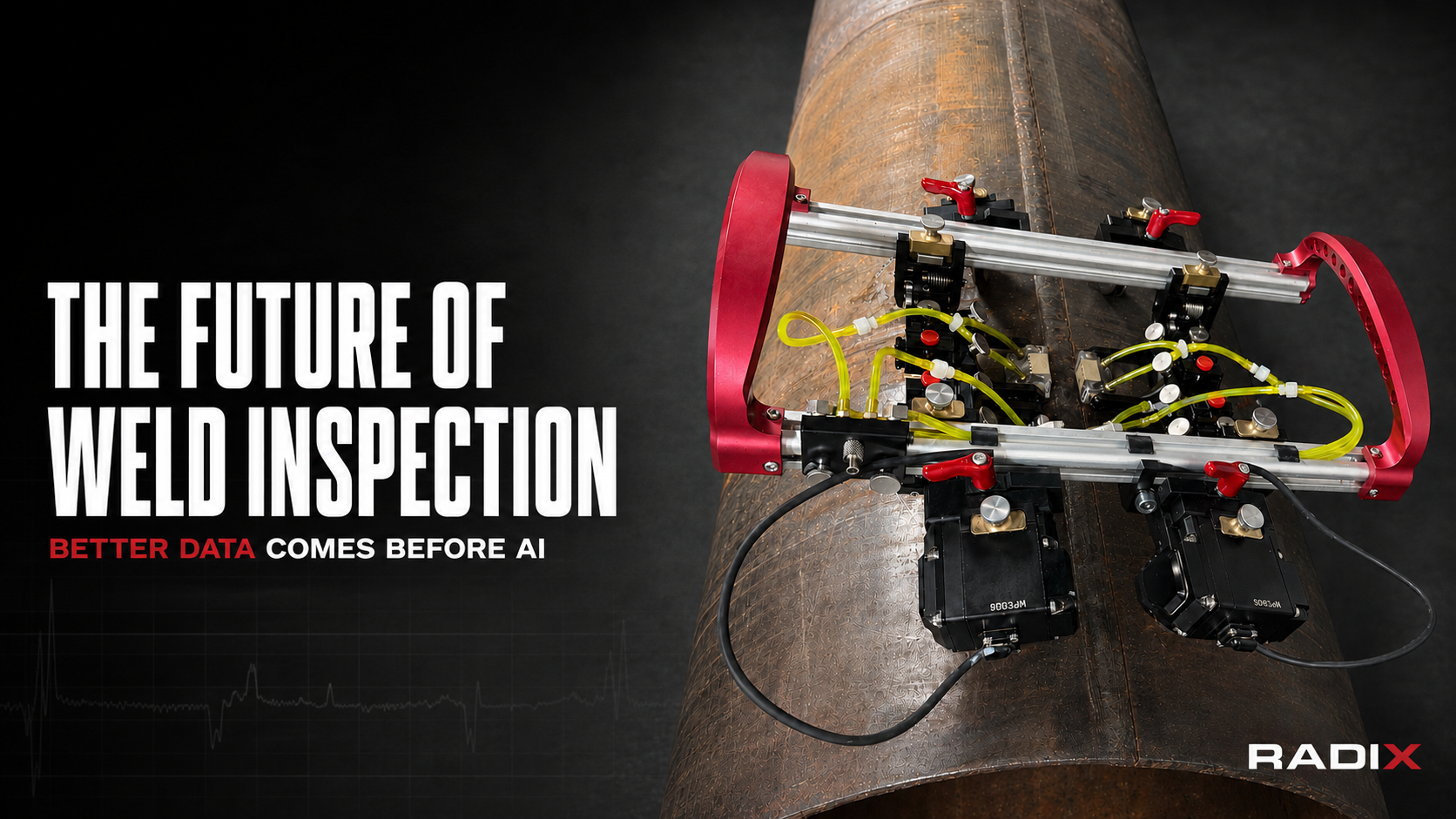
A scanner is positioned on the pipeline to control probe movement and maintain consistent contact.
There are two primary configurations:
- Manual scanners for smaller or targeted inspections
- Automated scanners for larger areas and repeatable workflows
Automated systems improve consistency and reduce variability in data collection.
4. Data Acquisition
The ultrasonic probe emits high-frequency sound waves into the pipe wall.
When these waves encounter a boundary—such as the back wall or a defect—they reflect back to the probe.
The system records these signals to determine:
- Material thickness
- Corrosion areas
- Internal defects
5. Data Interpretation
The collected data is analyzed using inspection software to identify changes in thickness and detect anomalies.
This step allows inspectors to:
- Locate corrosion zones
- Evaluate material loss
- Identify potential failure points
Accurate interpretation is critical for making informed maintenance decisions.
6. Reporting and Analysis
Inspection results are compiled into reports used for asset integrity planning and compliance.
Reports typically include:
- Thickness measurements
- Corrosion mapping (if applicable)
- Inspection coverage
- Recommendations for maintenance or repair
Why Automated Ultrasonic Scanning Improves Pipeline Inspections
Automated ultrasonic scanning systems provide several advantages over manual methods:
- Consistent probe pressure and movement
- Improved data quality and repeatability
- Faster inspection speeds
- Reduced operator variability
These benefits lead to more reliable inspection data and better long-term asset management.
Common Applications in Pipeline Inspection
Ultrasonic testing is used across multiple pipeline inspection scenarios:
- Corrosion detection and monitoring
- Wall thickness measurement
- Pipeline integrity assessments
- Preventative maintenance programs
It is especially effective in environments where early detection of material loss is critical.
Manual vs Automated UT for Pipelines
Manual Ultrasonic Testing
- Best for small areas or quick checks
- Lower setup time
- More dependent on operator skill
Automated Ultrasonic Testing
- Ideal for large-scale inspections
- Higher data consistency
- Better for repeatable inspections
FAQ
What is ultrasonic testing used for in pipelines?
Ultrasonic testing is used to measure wall thickness and detect corrosion or internal defects in pipelines.
Is ultrasonic testing safe for pipelines?
Yes, ultrasonic testing is a non-destructive method that does not damage the material being inspected.
What type of scanners are used for pipeline inspection?
Both manual and automated scanners are used, depending on inspection size, complexity, and required accuracy.
Why is a couplant required in ultrasonic testing?
A couplant allows sound waves to travel efficiently between the probe and the material, ensuring accurate readings.
Final Thought
Ultrasonic testing remains one of the most reliable methods for pipeline inspection due to its accuracy, repeatability, and non-destructive nature.
With the addition of automated scanning systems, inspections become more consistent and scalable, improving both data quality and inspection efficiency.