Table of Contents
Phased array ultrasonic testing, commonly known as PAUT, has become a trusted method for advanced weld inspection and ultrasonic testing applications. It gives inspection teams detailed data, better coverage, and more control over how defects are detected and evaluated.
But PAUT performance does not depend on the instrument alone.
A successful PAUT inspection also depends on how consistently the probe is positioned, how smoothly the scanner travels, and how repeatable the inspection setup is in real field conditions. That is where the scanner platform matters.
At ScanTech, our scanner systems are designed to support PAUT workflows while pairing with third-party measurement devices and instrumentation. This gives inspection teams more flexibility without forcing them into a single equipment ecosystem.
Built to Work With the Equipment Teams Already Trust
Many NDT teams already have PAUT instruments, flaw detectors, probes, wedges, and software workflows they rely on every day. Replacing that entire setup is not always practical, necessary, or cost-effective.
ScanTech scanner platforms are designed to complement those existing tools.
Instead of locking teams into one complete system, our scanners provide the mechanical platform, motion control, probe positioning, and scanning stability needed to support advanced ultrasonic testing. The measurement device or PAUT instrument can remain the one the technician already knows and trusts.
That flexibility is especially valuable for service providers who work across different customer sites, inspection procedures, and job requirements.
Why Scanner Stability Matters in PAUT
PAUT data quality depends heavily on consistency.
When the probe does not stay aligned, the wedge loses contact, or scanner movement becomes uneven, the data can suffer. This is especially important during weld inspection, where the scanner must maintain steady travel along the inspection path.
A strong scanner platform helps support:
- Consistent probe positioning
- Smooth encoded movement
- Repeatable scan paths
- Stable contact during inspection
- Adaptability across different surface conditions
- More efficient setup in the field
For PAUT workflows, the scanner is not just an accessory. It plays a major role in how inspection data is collected.
Flexible Scanner Platforms for Advanced UT Workflows
ScanTech scanners are built for real-world NDT environments where conditions are rarely perfect. Field teams may be working on pipe, tanks, vessels, or fabricated structures. Access may be limited. Surfaces may vary. Setup time may be tight.
Our scanner platforms are designed to support advanced UT workflows, including PAUT and other ultrasonic inspection methods, while allowing integration with third-party measurement devices.
This gives teams a practical way to build an inspection setup around the job instead of forcing the job to fit one system.
Avoiding Equipment Lock-In
One of the biggest advantages of a flexible scanner platform is freedom of choice.
Inspection companies often standardize around certain PAUT instruments or third-party measurement devices because their technicians are trained on them, their reporting workflows are built around them, and their customers already recognize the data format.
ScanTech supports that reality.
Our scanner platforms allow teams to pair trusted third-party instrumentation with rugged scanner systems built for stable movement and field performance. This approach helps protect existing equipment investments while expanding inspection capability.
PAUT Support for Weld Inspection Applications
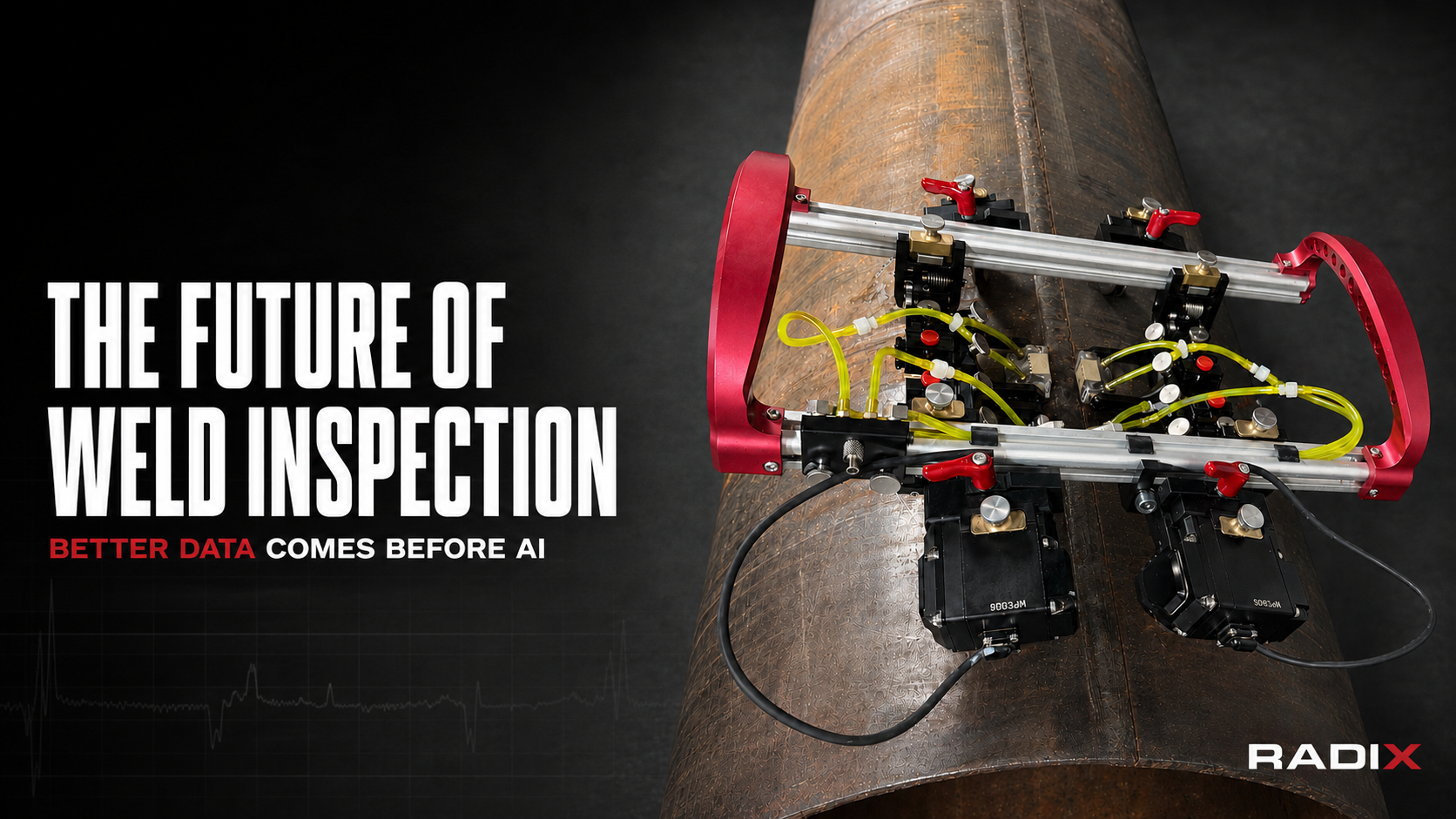
PAUT is commonly used for weld inspection because it provides detailed ultrasonic data and can help improve defect characterization. When paired with a stable scanner platform, PAUT inspections can become more repeatable and more efficient.
For weld inspection, scanner performance matters in areas such as:
- Weld seam tracking
- Probe and wedge alignment
- Encoder feedback
- Smooth travel along the inspection path
- Setup flexibility for different pipe or component sizes
- Compatibility with existing PAUT instruments
ScanTech scanner platforms are built to help support these needs while keeping instrumentation choices open.
A Practical Approach to Advanced NDT
The goal is simple: give inspection teams a scanner platform that works with the tools they already use.
By supporting PAUT workflows and third-party measurement devices, ScanTech helps NDT teams build flexible inspection systems without unnecessary equipment restrictions.
Whether the job calls for weld inspection, corrosion mapping, or a specialized ultrasonic testing setup, the right scanner platform can make a major difference in consistency, efficiency, and field performance.
Looking for a scanner platform that supports PAUT workflows and pairs with third-party instrumentation?
Contact ScanTech to discuss scanner options for advanced UT and weld inspection applications.