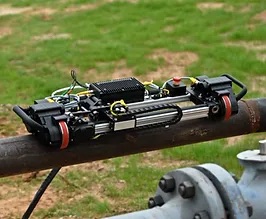
Automated ultrasonic scanners are changing how industrial inspections are planned and performed.
For many inspection teams, the question is no longer whether ultrasonic testing works. The real question is which inspection approach makes the most sense for the application, the asset, and the reporting requirement. In many cases, that decision comes down to automated ultrasonic scanners versus manual UT scanners.
Both methods have value. Both can play an important role in inspection workflows. But they are not interchangeable.
The biggest differences come down to speed, repeatability, coverage, data quality, and how much confidence is needed in the final result.
What are automated ultrasonic scanners?
Automated ultrasonic scanners are mechanized systems that move the probe across the inspection surface in a controlled and repeatable path.
Instead of relying entirely on hand movement, the scanner guides the inspection process using defined motion, encoder feedback, or programmed travel. This helps create more consistent scan patterns and more reliable data collection across the target area.
Automated systems are commonly used when inspections require:
- repeatable coverage
- high data consistency
- large inspection areas
- documented scan paths
- faster collection over broad surfaces
These systems are often used for corrosion mapping, tank floor or wall inspections, pipe inspections, and weld inspection workflows where structured movement helps support better reporting.
For example, the XR Spider Corrosion Mapping Scanner is designed for corrosion mapping applications where consistent movement and repeatable data collection matter.
What is a manual UT scanner?
A manual UT scanner is a simpler inspection tool that still uses ultrasonic testing but depends more heavily on operator movement and technique during the scan.
Manual UT setups can range from handheld inspection methods to encoded manual scanners that provide some positional tracking while still depending on the technician to move the device across the surface.
Manual systems are often a practical fit for:
- smaller inspection areas
- quick spot checks
- simpler inspection jobs
- limited access locations
- situations where full automation is not required
Manual UT can be effective when the inspection scope is narrow and the reporting need is less complex. It can also be a good option when portability and setup speed matter more than area coverage.
Automated ultrasonic scanners vs manual UT scanners
The difference between automated ultrasonic scanners and manual UT scanners is not just about equipment. It is about process control.
Manual UT depends more on the technician’s motion, consistency, and pace. Automated UT depends more on the scanner’s mechanics, motion path, and structured workflow.
That difference affects everything that follows.
1. Coverage consistency
This is one of the biggest reasons automated ultrasonic scanners are used.
When a scanner follows a controlled path, coverage becomes more consistent. That matters on larger assets where missing areas or inconsistent overlap can affect the usefulness of the inspection.
Manual scanning can still produce good results, but consistency often varies more from pass to pass, especially over larger areas or longer shifts.
For applications where complete area coverage matters, structured corrosion mapping solutions offer a clear advantage.
2. Data repeatability
Repeatability is a major advantage of automated systems.
When motion is stable and encoded, the resulting data is easier to compare across scans, inspection intervals, or different assets. That improves confidence when tracking changes over time or supporting condition-based decisions.
Manual UT can be useful for localized checks, but data repeatability is harder to maintain when movement is controlled by hand.
3. Inspection speed on larger assets
On broad inspection surfaces, automated ultrasonic scanners usually improve efficiency.
That does not always mean a faster setup. Some automated systems take more preparation at the beginning. But once deployed, they can collect large amounts of data more efficiently and with fewer interruptions.
Manual UT may feel faster for very small tasks, but it becomes less efficient as area size, reporting requirements, and documentation needs increase.
This is especially true in tank inspection solutions where wider coverage and repeatable thickness profiling support better inspection workflows.
4. Operator dependency
Manual scanning places more of the result on individual operator control.
That is not necessarily a weakness when a highly experienced technician is doing targeted work. But it does introduce more variability into the process.
Automated ultrasonic scanners reduce that variability by shifting more control into the mechanics of the system. Stable motion, consistent contact, and structured travel help reduce differences caused by speed changes, uneven movement, or inconsistent pass spacing.
5. Data quality for reporting
Good reporting depends on good data.
If an inspection requires traceable results, repeatable coverage, or mapped data across a surface, automated systems often support a better end result. The ability to collect organized, structured data makes it easier to review, compare, and turn into usable reports.
For example, ScanTech’s Analyst XR corrosion mapping software is built to support organized corrosion mapping workflows where scan data needs to be more than just a single reading.
When manual UT scanners still make sense
Automated ultrasonic scanners are not the right answer for every job.
Manual UT scanners still make sense when the work is narrow in scope, access is limited, or the inspection only requires a small amount of targeted data. In those cases, the added setup of an automated system may not be necessary.
Manual UT is often a fit for:
- isolated thickness checks
- small follow-up areas
- basic screening work
- tight spaces with limited room for scanner deployment
- jobs where simple measurements are enough
The key is matching the method to the inspection requirement instead of assuming one approach is always better.
When automated ultrasonic scanners make more sense
Automated ultrasonic scanners make more sense when the inspection requires structured coverage and confidence in the result.
That includes jobs involving:
- corrosion mapping
- larger surface areas
- repeat inspections over time
- encoded scan data
- client reporting requirements
- workflows where reducing re-scans matters
They are especially valuable when inspection teams need more than just readings. They need usable, consistent inspection records.
In those cases, systems designed for specific applications can help improve both inspection speed and confidence. The Apex Modular Universal Scanner Platform is one example of a modular scanner platform built to support a range of inspection workflows.
What about B-scan vs C-scan data?
This is where the difference between scanner types often becomes more important.
Many manual inspection workflows are centered around simpler thickness checks or more limited scan data. Automated systems are often better suited for structured B-scan or C-scan collection, depending on the application and software.
That distinction matters because B-scan and C-scan are not the same thing.
B-scan is typically used for thickness profiling and linear inspection review. C-scan is used for area-based corrosion mapping and broader surface visualization. Choosing the wrong workflow can create confusion in both planning and reporting.
For a deeper explanation, see How to Interpret B-Scan vs. C-Scan Ultrasonic Data.
Common mistakes when comparing automated and manual UT
A lot of inspection teams compare these methods too simply.
Mistake 1: Comparing only equipment cost
The true comparison is not just scanner cost. It is inspection efficiency, data quality, repeat work, reporting needs, and how much confidence is required in the final result.
Mistake 2: Assuming manual is always faster
Manual methods may be faster for a very small task. That changes quickly on larger assets where coverage, documentation, and repeatability matter.
Mistake 3: Ignoring application fit
A scanner should match the job. Corrosion mapping, weld inspection, tank work, and pipe inspection each have different motion, access, and reporting needs.
Mistake 4: Focusing only on collection speed
Fast data collection has limited value if the result is inconsistent or incomplete. Stable mechanics and structured movement matter because they support better data.
This is one reason data quality in UT scans remains such an important part of inspection planning.
How to choose between automated ultrasonic scanners and manual UT scanners
The best choice depends on what the inspection needs to accomplish.
A practical way to decide is to ask:
- Is the inspection area large or small?
- Does the work require mapped data or simple thickness checks?
- How important is repeatability?
- Will the data need to support reporting over time?
- Is reduced operator variability a priority?
- Is the application better suited to structured motion?
If the job calls for broad coverage, repeatable movement, and organized scan data, automated ultrasonic scanners are usually the better fit.
If the job is limited in size and only needs a simple targeted inspection, manual UT may be the more practical choice.
Final takeaway
Automated ultrasonic scanners and manual UT scanners both have a place in industrial inspection.
Manual UT remains useful for targeted work, quick measurements, and smaller jobs. Automated ultrasonic scanners are better suited for structured inspections where area coverage, repeatability, and data quality matter more.
The decision should not be based on habit alone. It should be based on what the asset requires, what the inspection needs to prove, and what level of confidence the final result must support.
When the job demands consistent movement and more reliable coverage, automated ultrasonic scanners often give inspection teams a stronger process from start to finish.