The Wrong Choice Costs More Than Equipment
Choosing between a chain scanner and a magnetic crawler is not just a technical decision. It directly impacts inspection speed, data quality, and overall job profitability.
Most comparisons focus on mobility. That’s where they go wrong.
The real question is simple:
Which system produces consistent, high-quality data in real-world conditions?
Because in the field, instability doesn’t just slow inspections down. It forces rework, delays reporting, and reduces confidence in results.
What Each System Is Designed to Do
Before comparing performance, it’s important to understand the design intent behind each system.
Understanding the Two Approaches
Magnetic Crawlers
Magnetic crawlers rely on adhesion to move across ferrous surfaces. They are commonly used on:
- Tanks
- Ship hulls
- Flat or large-radius steel structures
They solve access problems—but introduce stability tradeoffs.
Chain-Based and Modular Scanning Systems
Chain scanners and modular scanners approach the problem differently.
Instead of relying on adhesion, they focus on controlled, consistent deployment around the inspection surface.
ScanTech’s systems reflect this approach:
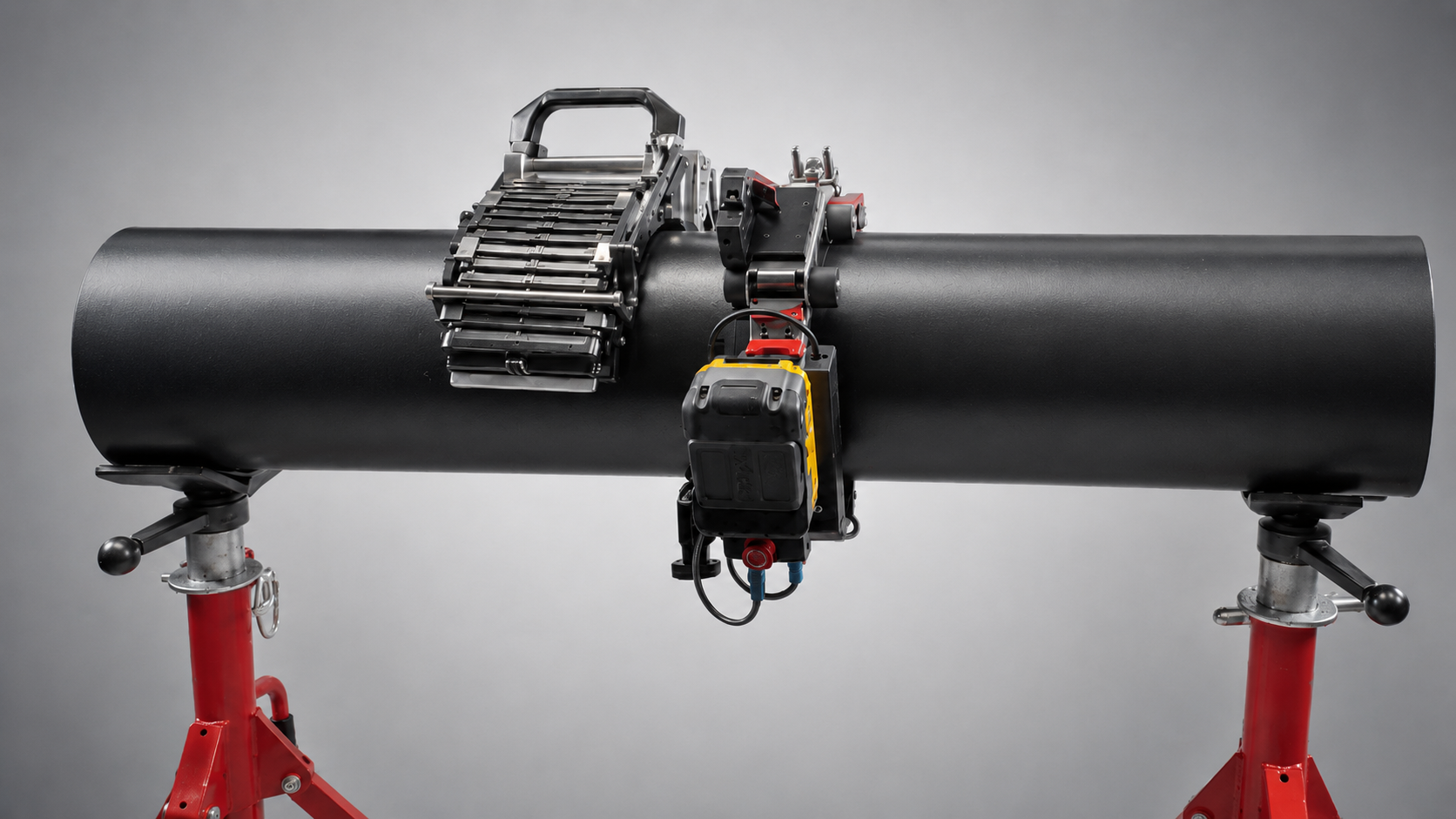
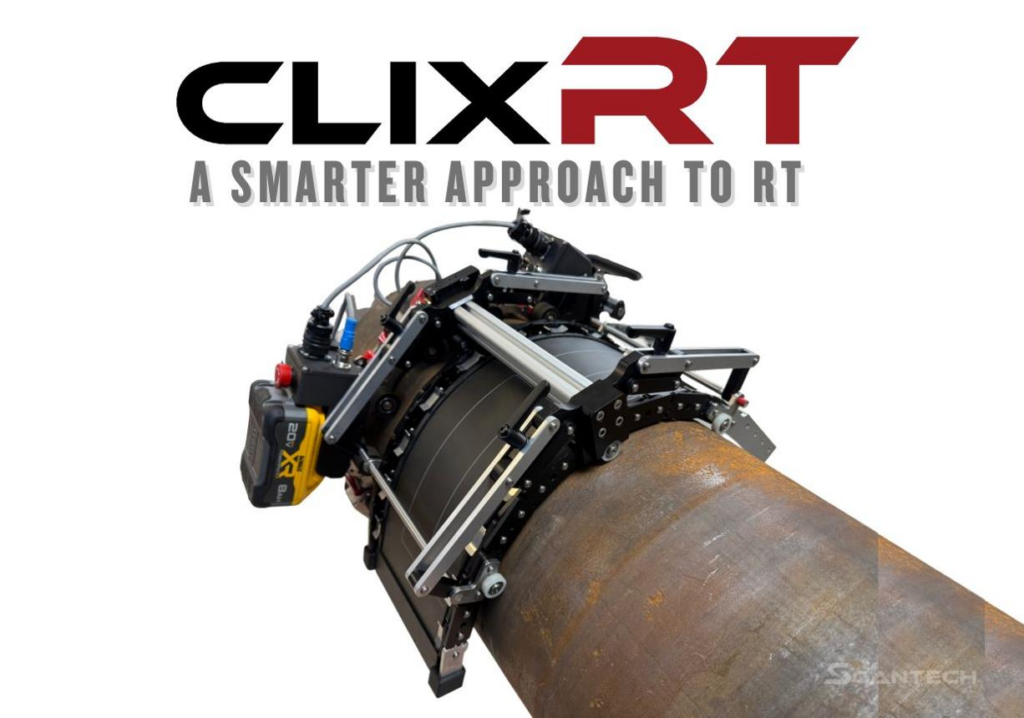
- CLIX → Designed for pipe inspection, wrapping fully around the circumference
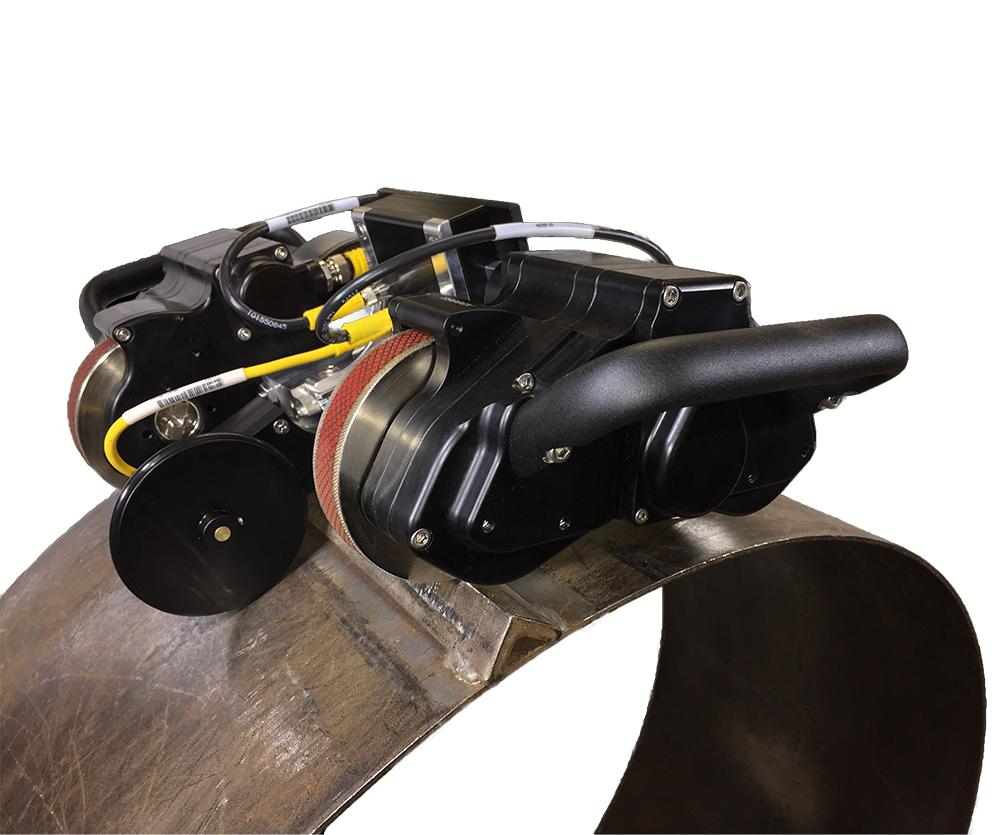
- X3 Spider → Built for corrosion mapping and surface-following stability
Surface Compatibility: Where Limitations Start
Magnetic Crawlers
Magnetic systems are restricted to:
- Ferrous materials only
- Surfaces with sufficient magnetic strength
Performance can drop on:
- Coated surfaces
- Corroded areas
- Thin materials
CLIX Chain Scanner
CLIX removes those limitations by design:
- Works on ferrous and non-ferrous materials
- Maintains consistent positioning regardless of coating
- Adapts to varying pipe diameters
This expands where inspections can be performed without changing systems.
Stability: Where Data Quality Is Won or Lost
This is the most overlooked factor—and the most important.
Magnetic Crawlers
Even high-quality crawlers can experience:
- Micro-slippage
- Uneven traction
- Reduced contact on curvature
That leads to:
- Signal inconsistency
- Data variation
- Increased likelihood of rework
CLIX + X3 Spider Approach
ScanTech systems are designed around mechanical stability and surface-following performance.
CLIX provides:
- Full circumferential grip
- Even force distribution
- Consistent sensor positioning
X3 Spider enhances surface-following performance with:
- Constant force probe pressure
- Stable contact across irregular surfaces
- Reduced tipping or signal loss
The result is cleaner, more repeatable data.
Payload Capability: One System or Multiple
Magnetic Crawlers
Payload is limited by magnetic force.
This restricts:
- Larger sensors
- Multi-method setups
- Digital radiography configurations
CLIX System
CLIX is designed to support:
- Digital radiography setups
- Ultrasonic testing
- Multiple inspection configurations
This allows one platform to handle multiple inspection methods without switching systems.
Performance Comparison
| Feature | CLIX / X3 Spider | Magnetic Crawler |
|---|---|---|
| Material Compatibility | Ferrous + Non-Ferrous | Ferrous Only |
| Stability on Pipe | High | Moderate |
| Coated Surface Handling | Strong | Limited |
| Payload Capacity | High | Limited |
| Multi-Method Capability | Yes (UT, RT, CM) | Limited |
| Data Consistency | High | Variable |
Setup Time: Where Efficiency Compounds
Magnetic Crawlers
- Require surface validation
- Slower repositioning
- Performance depends on conditions
CLIX
- Fast wrap-around deployment
- Minimal setup
- Quick repositioning between scans
Over large inspection scopes, this difference becomes significant.
Real-World Pipeline Inspection Scenario
Magnetic Crawler Workflow
- Confirm magnetic adhesion
- Monitor for slippage
- Adjust positioning frequently
- Validate data consistency
CLIX + X3 Spider Workflow
- Deploy around pipe
- Maintain stable positioning
- Collect consistent data
- Reduce need for rework
The difference shows up in both speed and confidence.
The Hidden Cost: Unreliable Data
Most equipment comparisons focus on features.
The real cost shows up later:
- Re-scans
- Delayed reporting
- Reduced confidence in inspection results
Unstable systems create hidden inefficiencies that compound over time.
When Magnetic Crawlers Still Make Sense
Magnetic crawlers remain useful when:
- Inspecting large flat steel surfaces
- Working in vertical or overhead environments
- Access is the primary challenge
When CLIX and X3 Spider Are the Better Choice
These systems are better suited when:
- Inspecting pipelines and curved surfaces
- Working across different materials
- Running multi-method inspections
- Prioritizing consistent, high-quality data
Final Takeaway: The Best System Produces the Best Data
The biggest mistake in equipment selection is focusing on movement.
The priority should be:
- Stability
- Contact consistency
- Repeatability
Because those are the factors that define data quality.
And data quality defines the outcome of every inspection.