Table of Contents
Weld inspection is the process of examining welded joints for quality, strength, and safety to ensure they meet required standards. It’s a critical practice in industries like oil & gas, construction, and manufacturing, where the integrity of welds can directly impact structural reliability and safety. Traditional weld inspection methods include ultrasonic testing (UT) – which uses high-frequency sound waves to detect internal flaws – and radiographic testing (RT) – which uses X-rays or gamma rays to produce images of a weld’s internal structure. Both methods are effective for finding defects such as cracks, porosity, or lack of fusion, but each comes with practical challenges in the field. In this post, we’ll explore common challenges in weld inspection and how modern solutions are overcoming them. We’ll highlight an advanced tool – the ScanTech Clix Modular Chain Scanner – and present a case study where a small inspection company managed to perform 51 weld inspections in just 3 hours by leveraging new technology. This real-world example illustrates how weld inspection can be made faster, safer, and more cost-effective with the right approach.
Challenges in Traditional Weld Inspection
Performing high-quality weld inspections on pipelines and critical structures isn’t always straightforward. Conventional approaches often face several hurdles:
- High Equipment Costs: Advanced RT equipment (like digital radiography systems) and automated UT scanners can be very expensive. Traditional digital radiography setups often require heavy, rigid scanner frames and custom-fit bands for different pipe sizes, driving up the capital cost per unit. For a small NDT service provider, investing in multiple systems to cover various pipe diameters or techniques can be prohibitive.
- Limited Flexibility: Many inspection tools are built for specific use cases. Bulky single-purpose machines may work well on one pipe size or one method (say, only UT or only RT) but are difficult to adapt when the job changes. This lack of flexibility makes it hard for a small company to offer a range of services – for example, inspecting both small-diameter piping welds and larger pipelines, or switching between ultrasonic and radiographic inspection. Scaling up to new projects often meant buying an entirely different scanner or accessory kit, which isn’t practical for smaller firms.
- Handling & Safety Concerns: Radiographic weld inspection with X-ray or gamma sources introduces safety constraints – technicians must maintain distance during exposures, and cables for scanner control can become tripping hazards or limit where the scanner can go. Moreover, bendable digital radiography panels (used to wrap around pipes for imaging) are fragile and prone to damage if over-bent. In traditional setups, repeatedly strapping a flexible detector to curved pipes can stress the panel, leading to costly replacements. Protecting these sensitive imaging panels and ensuring consistent results is a major challenge when performing RT in the field.
These challenges have historically made it difficult for smaller inspection companies to enter the pipeline weld inspection market, especially for digital radiography. Excessive upfront costs, inflexible gear, and the risk of damaged equipment can turn advanced weld inspection into an unviable endeavor for a business with limited resources. What’s needed is a more adaptable, cost-effective solution that can tackle a variety of weld inspection scenarios without compromising on safety or quality.
Advanced Weld Inspection Solutions with Modular Scanners
Today, innovative scanning technology is reshaping how weld inspections are done. Modular chain scanners are a prime example – these systems can adapt to different pipe sizes and inspection methods, giving technicians a single platform for multiple tasks. ScanTech’s Clix Modular Chain Scanner is one such solution engineered to address the pain points of traditional equipment.
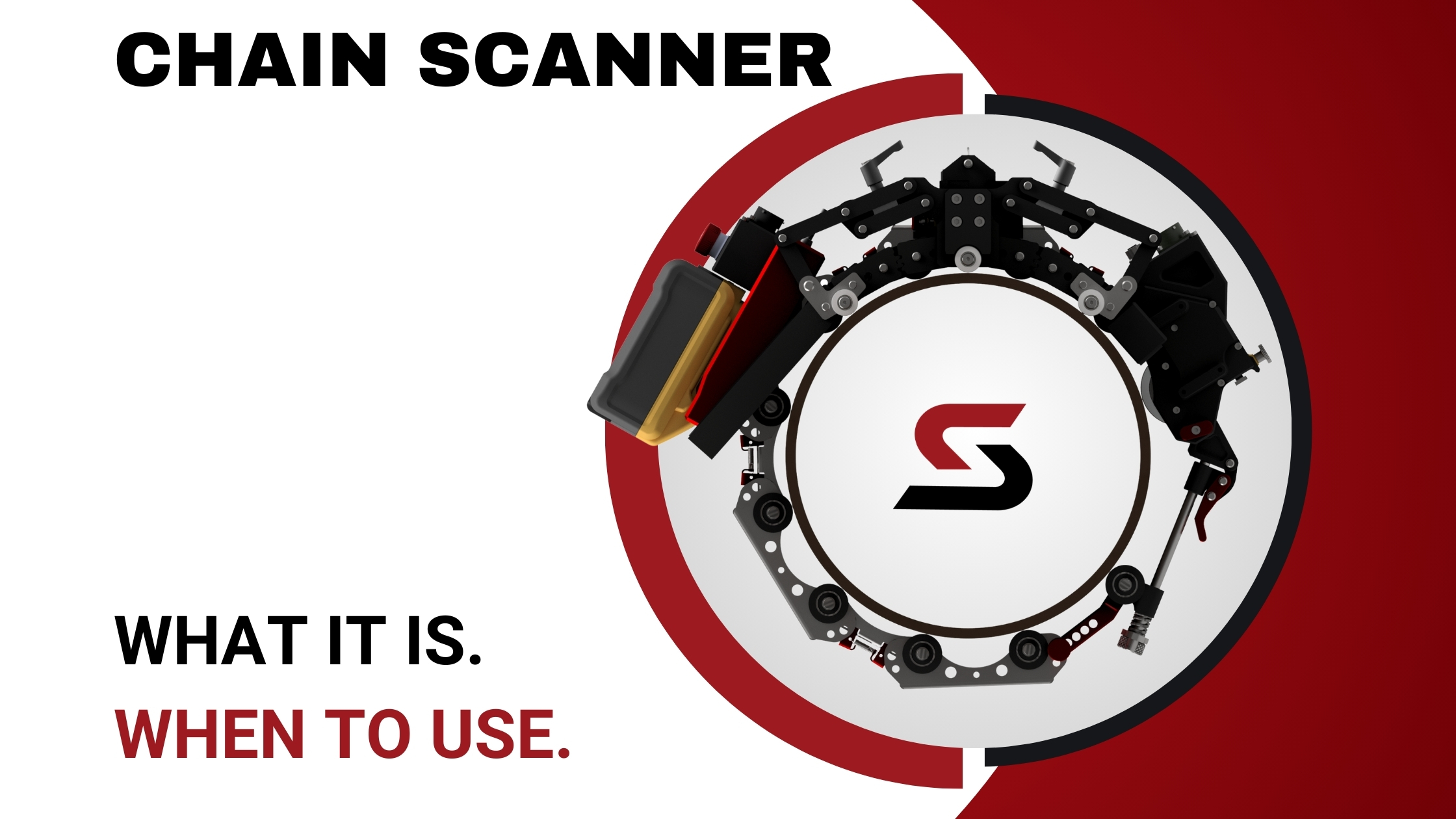
The Clix scanner is a versatile inspection platform designed for weld inspection, corrosion mapping, and radiography (RT) in one adaptable system. Instead of needing separate tools for UT and RT, Clix can handle both. Its chain-linked design can be adjusted to wrap around pipes ranging from 6 inches to 48 inches in diameter (with options for even larger custom sizes). This means one scanner can flex to fit various pipe diameters without the need for expensive one-size-per-pipe bands. The system’s patent-backed design supports a high payload (for carrying probes or even an X-ray source and detector) and effectively has no limit on scan length – it can scan long pipelines by simply adding chain links as needed.
Importantly, Clix is built with field practicality in mind. It features tool-free adjustments and a compact drivetrain that allows it to be deployed in tight spaces or tricky positions on pipe welds. The scanner’s wheel units maintain consistent probe pressure and alignment, ensuring reliable ultrasonic coupling or imaging results even on uneven surfaces. By being modular, one Clix unit can be reconfigured on the fly – for example, quickly switching from a weld UT scan setup to a corrosion mapping setup, or adjusting from a 24″ pipe to a 16″ pipe – without hours of teardown or a fleet of different scanners. For technicians, this level of flexibility directly translates to saved time and money.
One of the standout capabilities of modern scanners like Clix is wireless operation. In the case of Clix, an automated wireless configuration is available specifically for radiography tasks. This means the scanner can be driven around a pipe remotely, with no tethering cables, when performing an RT inspection. Wireless motion control greatly improves safety and workflow – inspectors can operate the scanner from a safe distance during X-ray exposure, and there are no cables to restrict movement or accidentally snag in the work area. The result is a streamlined workflow that keeps personnel safe and eliminates the hassle of routing long cables around pipes or through confined spaces. (For non-RT inspections like UT, the scanner can be used in manual or tethered modes as needed, but the wireless feature for RT is a game-changer for productivity and safety.)
Another innovation addresses the delicate digital radiography (DR) panels used in place of X-ray film. ScanTech has developed a patented panel protection system that works with the Clix scanner to safeguard bendable DR detectors from over-bending and fatigue. By maintaining a uniform curvature of the panel against the pipe, this solution (based on ScanTech’s ARC chain design) prevents the kind of damage that normally occurs when flexing a digital X-ray panel around small diameters. Essentially, it locks the detector in a controlled arc, so you get a clear radiographic image of the weld without stressing the expensive sensor. This innovation significantly extends the life of the DR equipment and lowers the long-term costs of doing radiographic weld inspections.
ScanTech’s Clix Modular Chain Scanner: A Closer Look
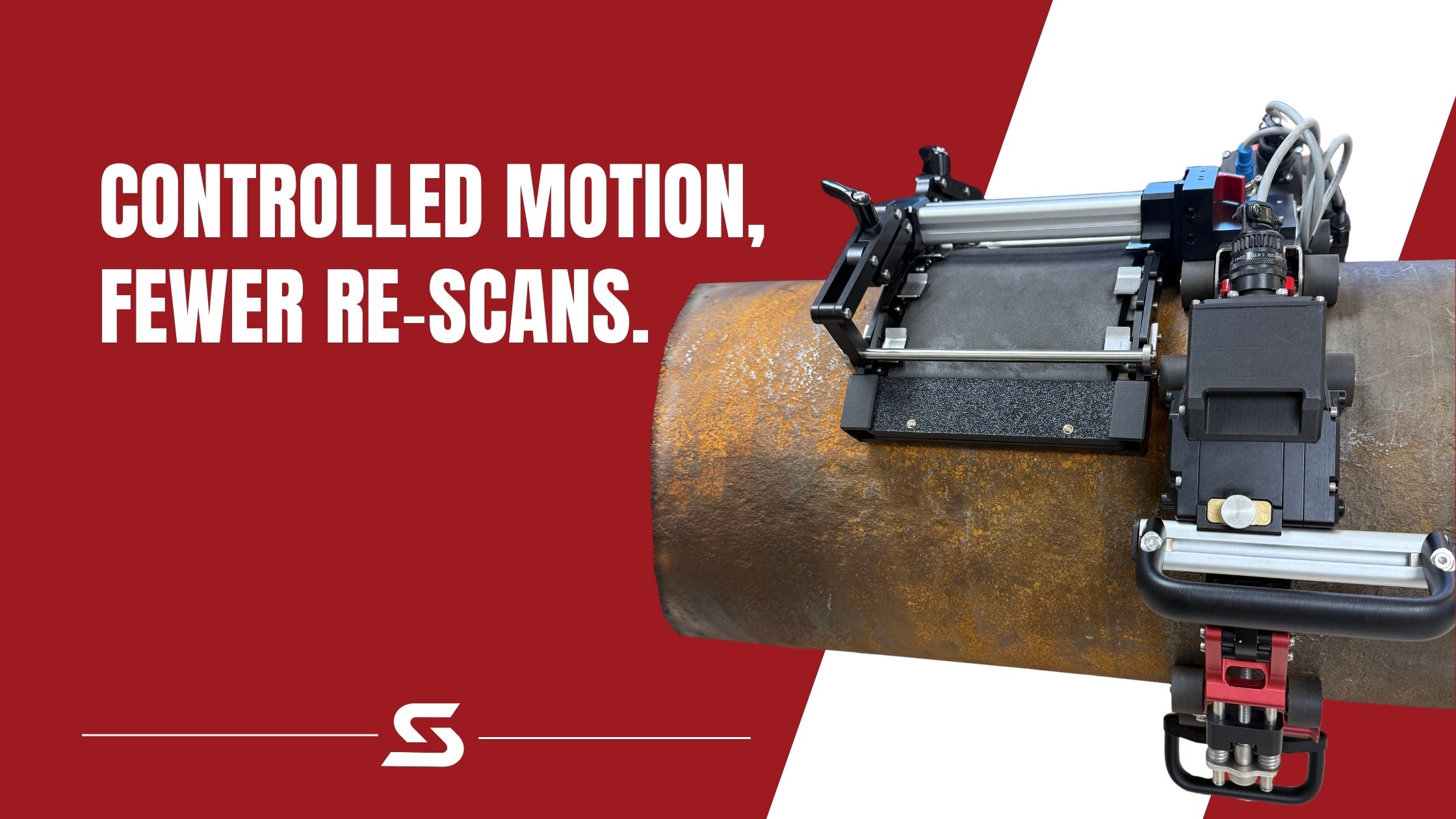
ScanTech’s CLIX Modular Chain Scanner is a multi-method weld inspection platform that adapts to various pipe sizes. In radiography mode, it offers 100% wireless scanning for maximum mobility and safety.
The Clix Modular Chain Scanner (by ScanTech) brings together all the above advances into a single solution for weld inspection. In practice, using Clix means an inspection crew can carry one compact kit to handle many scenarios. Key features of Clix include:
- Multi-Method Compatibility: The Clix scanner supports ultrasonic probes for weld ultrasonic testing, as well as mounts for digital radiography equipment. With a quick reconfiguration, the same scanner can perform a high-resolution UT scan or hold an X-ray source and detector for an RT shot. This dual capability is built into the design, allowing inspectors to switch techniques without swapping out entire scanner systems. For example, an inspector could scan a weld with UT to find volumetric defects and then immediately perform a radiographic scan on the same spot to double-confirm a flaw, all with the same scanner chassis.
- Flexible Chain Design: As a chain-type scanner, Clix isn’t limited by a fixed frame. Its linked segments can expand or contract to fit pipes from 6″ up to 48″ in diameter (standard kit options at 24″, 36″, 48″ diameters, with extensions for larger sizes). This flexibility means odd-sized or varying-diameter pipes can be accommodated with ease. The chain links securely clamp around the pipe, keeping scanners and probes stable for precise data capture. For long pipelines, the “infinite” scanning length allows the system to crawl as far as needed by adding more links or simply repositioning and continuing the scan on the next section.
- Compact, High-Payload Drivetrain: The Clix scanner uses a compact drive unit that can carry heavy payloads – such as multiple ultrasonic probes or an X-ray imaging head – without losing stability or accuracy. The drivetrain’s low-profile form factor is ideal for confined spaces (e.g., inside pipe racks or under insulation) where larger scanners won’t fit. Despite its small size, it’s powerful enough to traverse circumferential welds and even vertical or overhead orientations on a pipe. This combination of strength and agility comes from an efficient mechanical design and proprietary Wheel Pack Assembly, which keeps the scanner’s movement smooth and the sensors in consistent contact with the surface.
- Wireless Operation for RT: When performing radiographic weld inspections, Clix can be used in a wireless mode. The scanner is equipped with a battery-powered drive and a wireless control interface, allowing operators to drive the scanner around the weld remotely. This capability is particularly useful for gamma radiography (using isotopes like Ir-192) or X-ray sources, where during exposure no personnel can be near the source. By eliminating the umbilical cables, Clix avoids the typical limitations of crawler scanners and can navigate around the pipe unobstructed. Wireless operation not only reduces tripping hazards but also speeds up setup and breakdown – no cables to string along the pipe means faster deployment and repositioning. In short, it enables a streamlined, safer workflow for RT inspections that was previously hard to achieve.
With these capabilities, the Clix Modular Scanner directly tackles the cost, flexibility, and safety challenges that plague traditional weld inspection methods. To see how this translates into real-world performance, let’s look at a case study of a small inspection company that adopted this technology.
Case Study: 51 Weld Inspections in 3 Hours
One small independent inspection company set out to offer advanced pipeline weld inspection services – specifically digital radiography – without incurring the typical high costs and complexity. They faced exactly the challenges outlined earlier: conventional digital RT systems were expensive and came with rigid commercial scanners that weren’t practical for a growing business. The company needed an affordable, flexible solution to perform field weld inspections on pipelines and piping of various sizes.
Challenge: For this company, entering the pipeline RT market was nearly impossible with off-the-shelf solutions. They identified three main barriers:
- Excessive Costs: Traditional digital radiography units and their accessories required a significant capital investment for each setup, including specialized bands or frames for different pipe sizes. The cost-per-weld inspection would have been too high to stay competitive.
- Limited Flexibility: Their existing equipment was bulky and single-purpose, making it hard to scale services. They couldn’t easily switch between inspecting a 4-inch process pipe weld and a 16-inch transmission pipeline weld – at least not without buying separate tooling for each. This lack of flexibility meant turning down jobs outside a narrow range.
- Panel Protection Risks: Using flexible DR panels on curved pipes introduced a risk of damaging the detectors. Every time a panel is wrapped around a pipe, there’s a chance of over-bending or applying uneven pressure, which could crack the detector’s imaging layer. A broken panel would mean tens of thousands of dollars in replacement costs, so the company was understandably cautious.
Faced with these challenges, the company turned to ScanTech’s Clix Modular Chain Scanner solution, outfitted with the wireless drive and panel protection system. The results were remarkable.
A ScanTech case study highlights how a small inspection company overcame cost and flexibility barriers. Using a Clix chain scanner with digital radiography, they successfully inspected 51 pipeline welds in only 3 hours on a 16-inch line.
Solution & Implementation: ScanTech provided a Clix chain scanner configured for 16″ pipeline welds, along with their XtenDR panel protection accessory for the DR detector and a wireless drive unit for remote operation. This setup allowed the inspection crew to quickly mount the scanner on each weld, secure the flexible X-ray panel in the protective arc housing, and perform a radiographic exposure – all without needing to manually hold equipment or run long control cables. The compact scanner could be rapidly unclamped and moved from weld to weld by one person. With the wireless controls, the operator stayed at a safe distance while the scanner carried the radiation source and detector around each weld for a full 360° exposure. The patented panel holder ensured the expensive digital panel remained in the correct curvature and was never overstressed, even as they moved it on and off the pipe repeatedly.
Over the course of a morning, this small team was able to inspect 51 welds in 3 hours on a 16-inch diameter mainline pipeline – a pace that would be very difficult to achieve with older technology. The efficiency came from minimal setup time at each weld and the ability to work continuously without stop-and-go cable management or equipment swaps. Every weld scan captured high-resolution images that revealed any internal flaws, and none of the digital panels were damaged in the process.
Benefits: The outcome of deploying this modular scanning solution was immediately apparent to the company:
- Lower Costs: The solution came at a fraction of the price of traditional full-size digital RT systems. With one Clix scanner, they avoided purchasing multiple rigs or pipe-specific tools. Additionally, by protecting the DR panel, they minimized the risk of an expensive asset breaking. This dramatically reduced their cost per weld inspection compared to earlier quotes with conventional gear.
- Market Expansion: Equipped with versatile and affordable technology, the company could offer pipeline radiography services that were previously out of reach. As the team noted, “This solution put us into a new RT market we couldn’t support before.” By being able to handle larger pipeline projects and provide on-site digital X-ray results, they opened up new business opportunities and revenue streams that they had to pass up in the past.
- Streamlined Workflow: The wireless scanner workflow made field operations much smoother. There was no need to string cables or reposition bulky equipment for each weld, which saved time on every scan. The wireless drive was highly reliable, so the scans proceeded without interruption or troubleshooting tangled cords. In short, the team could maintain a steady rhythm of scanning one weld after another, completing all 51 welds in about three hours – an impressive throughput that kept the project on schedule.
Key benefits from the case study included a drastic cut in equipment costs, access to new markets, and a safer, faster wireless inspection process. The customer’s feedback underscores the impact: “This solution put us into a new RT market we couldn’t support before.” The combination of panel protection, a compact high-torque scanner, and wireless operation made this possible.
The success of this case study exemplifies how advanced weld inspection tools can empower even small companies to perform at a level that rivals much larger operations. By smartly addressing the traditional pain points (cost, flexibility, and safety), the ScanTech solution enabled quick, high-quality inspections that satisfied both the service provider and their client.
ScanTech’s Key Differentiators in Weld Inspection
It’s worth highlighting the core technological differentiators that made the above results achievable. ScanTech’s weld inspection solution (centered on the Clix scanner) offers three key innovations:
- Patented Panel Protection: A unique support system that keeps flexible digital radiography panels in a controlled curvature during pipe weld inspections. This prevents over-bending and extends the panel’s lifespan, so technicians can perform multiple RT shots on curved pipes without damaging their detectors. By protecting this critical (and costly) component, ScanTech’s solution reduces downtime and replacement expenses, making digital RT more sustainable for everyday weld testing.
- Compact Drivetrain Design: The scanner’s compact drivetrain is engineered for strength and portability. It provides the torque and stability to carry heavy inspection payloads (like dual probes or an X-ray source) while remaining small enough to maneuver in confined or hard-to-reach areas. This design supports efficient integration across various scenarios – from large pipeline girth welds out in the field to small-diameter piping welds in a crowded plant – all with the same device. The compact, modular nature also means less physical strain on operators and quicker setup/teardown times.
- Wireless Operation: ScanTech’s wireless operation capability eliminates wired connections between the scanner and the operator’s controls during radiographic inspections. This ensures seamless remote control and data transfer without any tethering. In practice, wireless operation improves safety (operators can stay clear of radiation zones), enhances mobility (the scanner isn’t limited by cable length or snags), and simplifies workflow (no cables to move or protect). The system is even designed to be compatible with common industrial radiography sources (such as Iridium-192 gamma projectors), meaning it can be deployed for X-ray or gamma RT on pipelines with equal ease. Wireless technology in weld inspection is a relatively new development, and it’s proving to be a major advantage for productivity and hazard reduction.
The Future of Weld Inspection is Flexible and Efficient
Weld inspection will always be an essential task for maintaining safety and quality in critical infrastructure. What’s changing is how we conduct those inspections. As demonstrated, modern solutions like the Clix modular scanner are making it possible to inspect welds faster and more reliably than ever before – without pricing out smaller companies or compromising on safety. By focusing on flexibility (one scanner for many jobs), innovative protection for sensitive equipment, and wireless, data-driven workflows, companies can overcome the traditional barriers of cost and complexity in NDT.
For decision-makers in the NDT industry, the takeaways are clear. Investing in adaptable, high-tech weld inspection tools can pay off quickly by expanding your service capabilities and improving efficiency. An initial cost that is lower than legacy systems, combined with saved labor hours and new market opportunities, means a strong return on investment. Additionally, these tools help your technicians work safer and smarter, which is invaluable for sustained operations.
In summary, weld inspection is entering a new era where even a small team armed with the right technology can achieve results that were once out of reach. Whether it’s scanning 51 welds in a morning or ensuring not a single defect goes unnoticed, advanced scanners like ScanTech’s Clix are proving their worth. By embracing such innovations, the industry moves closer to the ultimate goal: welds that are thoroughly verified for integrity, delivered on time and on budget, with zero compromises on safety or quality.