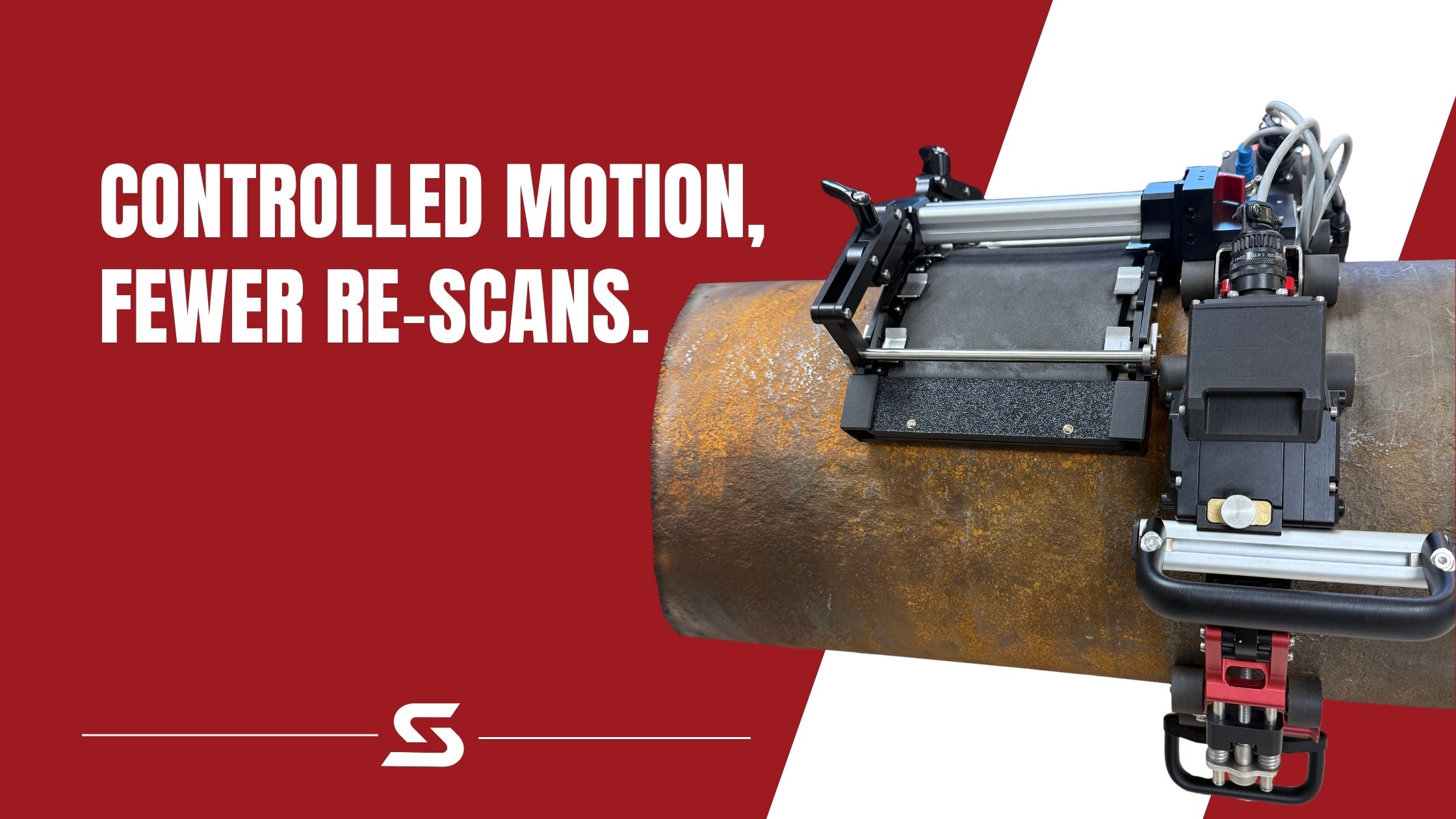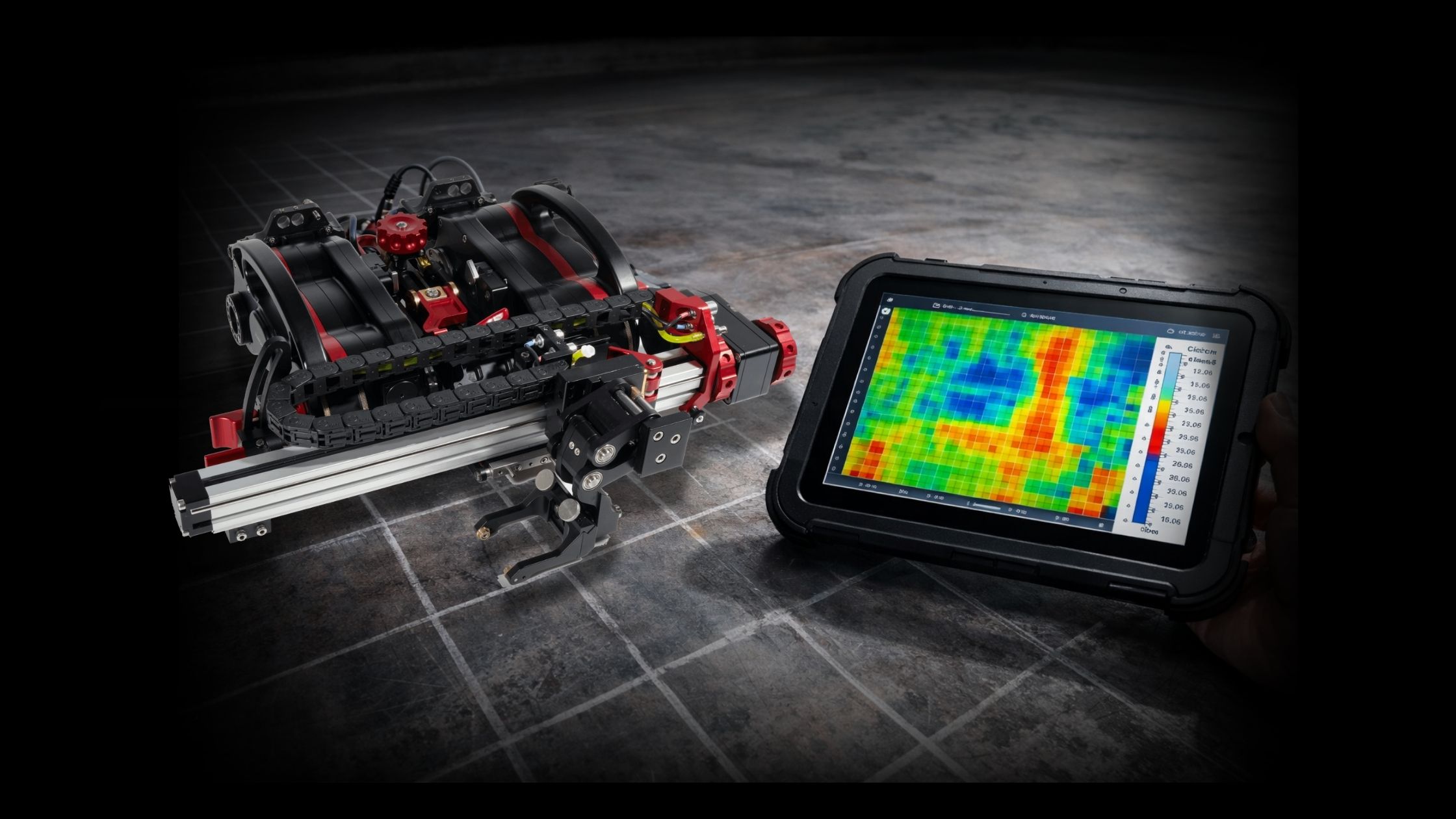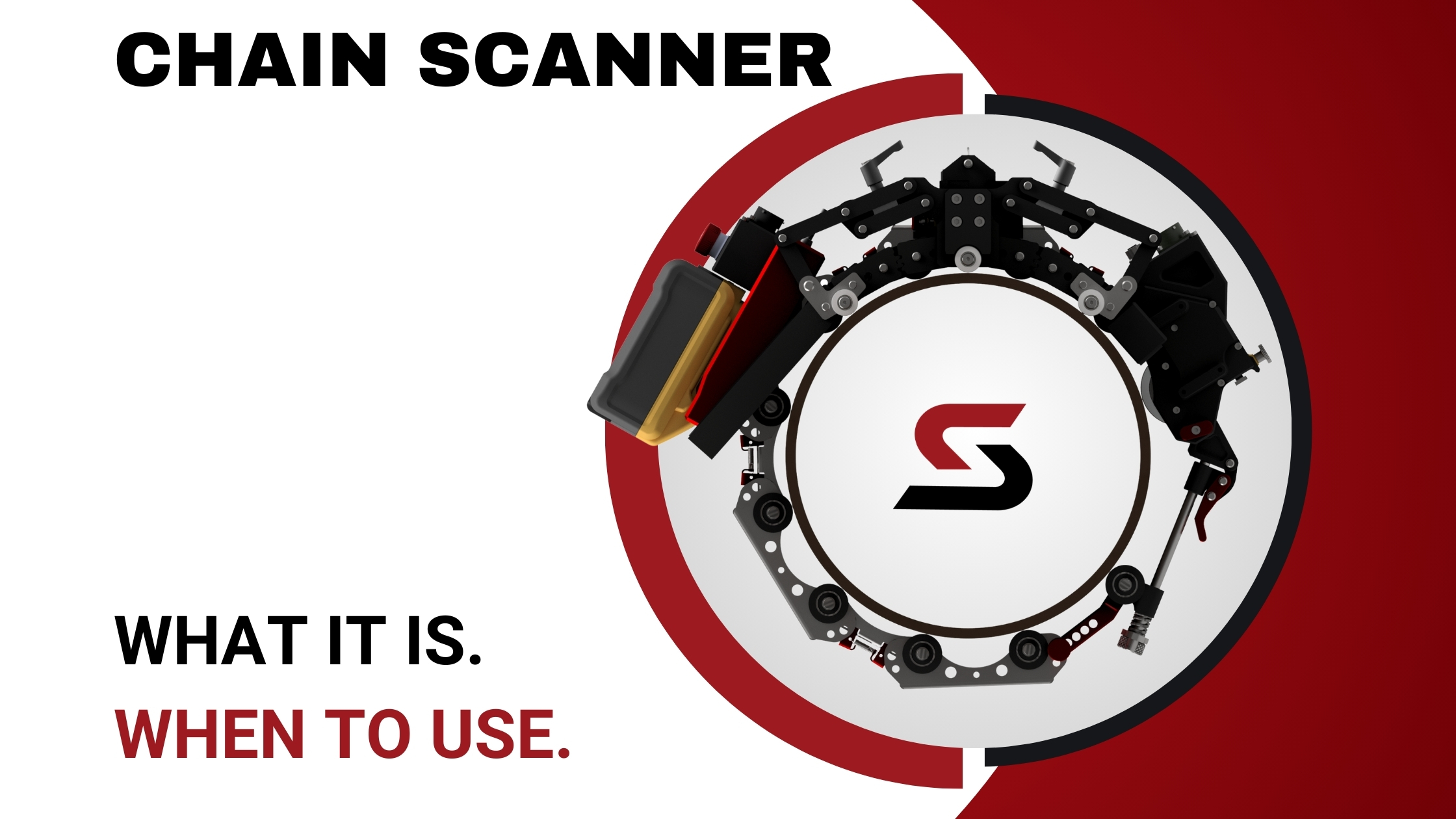
A chain scanner is a wrap-around scanning tool used in nondestructive testing (NDT) to guide an inspection method around pipe and other curved surfaces with controlled, repeatable motion. Chain scanners are commonly used for pipe weld inspection, corrosion mapping, and circumference-based inspection workflows where alignment, motion control, and repeatability directly influence the quality of inspection data and reporting. When scan paths stay consistent, inspections become easier to document, easier to repeat, and less likely to require re-scans.
Related reading: pipeline inspection and tank inspection.
What is a chain scanner?
A chain scanner uses linked segments (“chain links”) that wrap around a pipe diameter to create a stable track for the inspection payload to travel. The payload might include ultrasonic probes, radiography accessories, cameras, or other inspection tools depending on the application.
A chain scanner typically includes:
- A link system to match different diameters
- A latch/clasp to tension and secure the chain
- A drive mechanism (manual, motorized, or wireless depending on configuration)
- A payload mount designed to keep the inspection method aligned and stable
When chain scanners are used
Chain scanners are a practical fit when the inspection requires:
- Repeatable circumference motion (consistent speed and path)
- Stable alignment around pipe
- Reliable documentation for reporting and re-validation
Common use cases include:
- Circumferential pipe weld inspection for consistent indexing and scan planning
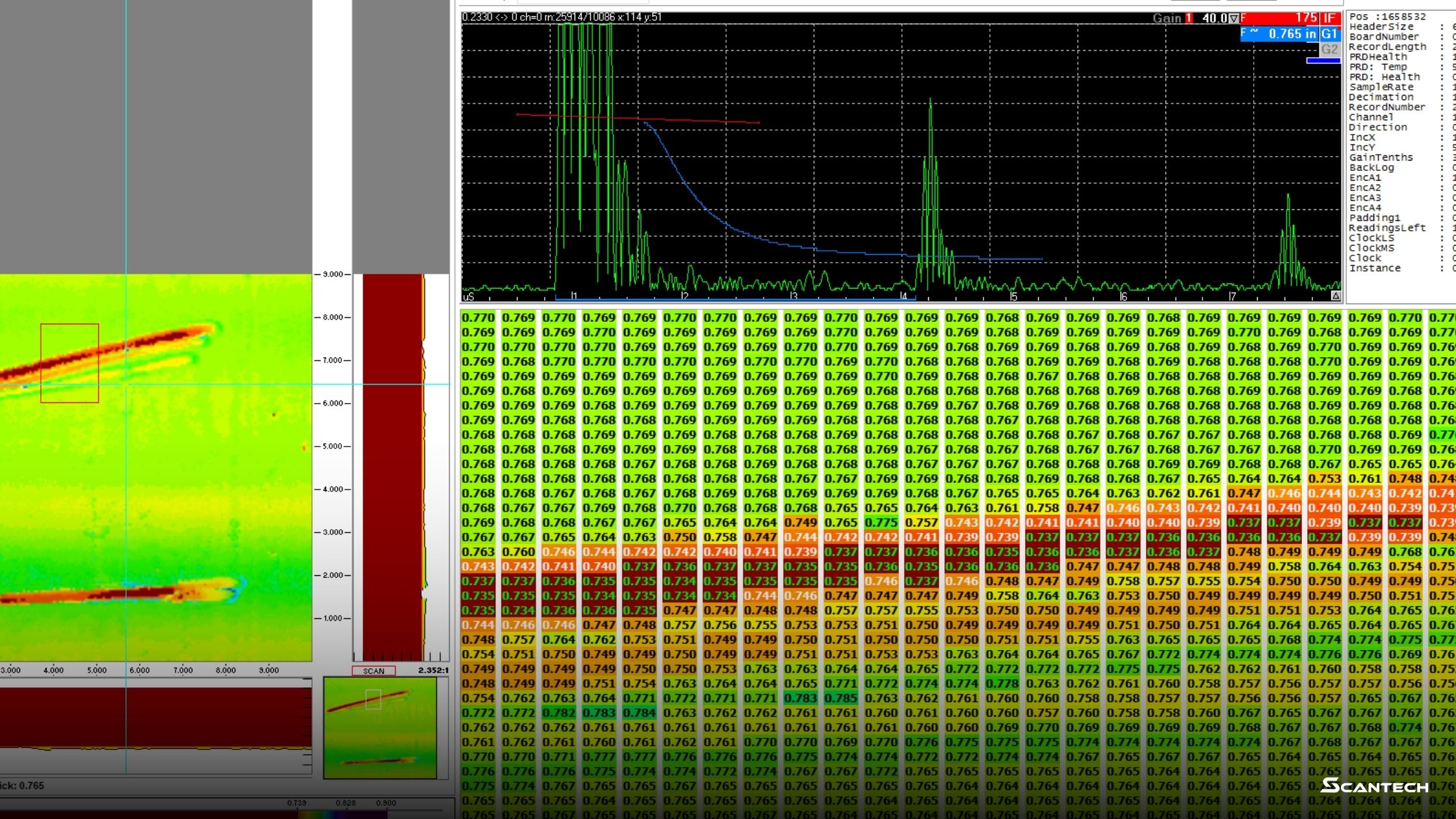
(see: weld inspection solutions) - Corrosion mapping on pipe where controlled passes improve coverage and repeatability
(see: corrosion mapping) - Long inspection runs where stability reduces variability and operator fatigue
- Tight-access environments where wrap-around control matters more than open-surface movement
Why chain scanners can reduce re-scans
Re-scans often happen when a scan cannot be repeated the same way twice. Chain scanners help reduce that risk by controlling:
- Motion path (consistent route around the circumference)
- Scan speed (more consistent timing and sampling)
- Positioning (repeatable alignment and indexing)
In many workflows, the practical benefit is simple: when the scan is repeatable, reporting is cleaner—and rework is less common.
Helpful tool: scan time estimator.
Chain scanner vs crawler vs band scanner
- A chain scanner wraps around the pipe using linked segments and is built for controlled circumference travel.
- A crawler typically drives along a surface and may not wrap the circumference.
- A band scanner uses a continuous band rather than linked segments, which can reduce modularity for diameter changes.
Need help selecting a chain scanner configuration?
Use the scan time estimator to plan passes and inspection duration, then request a demo to review diameter range, inspection method, and workflow requirements.
FAQs
What is a chain scanner in NDT?
A chain scanner is a wrap-around tool that guides an inspection payload around pipe using repeatable, controlled movement.
What inspections use a chain scanner?
Common uses include circumference-based pipe weld inspection and corrosion mapping workflows where consistent travel improves repeatability and reporting.
What matters most when selecting a chain scanner?
Diameter range, secure tensioning, payload stability, and motion control options matter most because they directly affect repeatability and data quality.